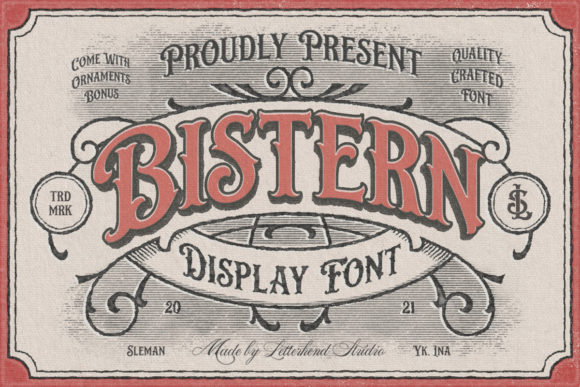
Bistern: The Victorian Charm for Modern Creations
In a digital landscape often dominated by sterile, minimalist sans-serifs, there is a distinct power in embracing the ornate. Bistern is not merely a typeface; it is a visual bridge connecting contemporary design with the rich heritage of the Victorian era. This old-fashioned display font captures the elegance and intricacy of 19th-century typography while remaining robust enough for today's diverse media environments. For creators who seek to add character without sacrificing readability, Bistern offers a unique opportunity to transform ordinary layouts into memorable experiences.
The appeal of Bistern lies in its specific aesthetic balance. It retains the high-contrast strokes and elaborate flourishes typical of Victorian lettering, yet it avoids the excessive clutter that can make historical fonts difficult to read on screens. This makes it an incredibly versatile tool for posters, labels, branding, and editorial work. When you add it confidently to your favorite creations, the outcome is often a striking blend of nostalgia and modernity that immediately draws the eye.
Understanding the Character of Bistern
Before diving into applications, it is essential to understand what makes this font stand out. Unlike standard serif fonts that prioritize neutrality, Bistern carries a personality. Its letters feature sharp angles, decorative swashes, and a distinct weight that commands attention. This "old-fashioned" quality does not mean it is outdated; rather, it suggests timelessness. In a market saturated with generic templates, using Bistern signals that a project has been curated with care and intention.
The font works best when used as a display element. This means utilizing it for headlines, titles, and short phrases where the intricate details can be appreciated. Trying to set long paragraphs of body text in Bistern would likely overwhelm the reader and obscure the message. However, when paired correctly with a clean, simple body font, Bistern becomes the star of the show, guiding the viewer through the hierarchy of information with grace.
Creative Applications for Designers and Marketers
For graphic designers and brand strategists, Bistern opens up a world of thematic possibilities. One of the most effective uses is in branding and packaging. Imagine a craft brewery label, a boutique coffee roaster, or a handmade soap company. These products often rely on storytelling and authenticity. Bistern provides the visual language to communicate heritage and quality instantly. A vintage-style beer label featuring Bistern feels established and trustworthy, evoking a sense of tradition that modern geometric fonts simply cannot replicate.
- Event Posters: Whether for a theater production, a jazz festival, or a literary reading, Bistern sets the mood before a single word is read. It suggests sophistication and invites the audience into a specific atmosphere.
- Editorial Headlines: Magazine covers and blog headers benefit from the dramatic flair of Bistern. It breaks the monotony of standard web typography and encourages users to stop scrolling and engage with the content.
- Invitations and Stationery: Weddings, galas, and formal announcements require a touch of formality. Bistern delivers this effortlessly, adding a layer of exclusivity to printed materials.
Adapting Bistern for Different Audiences
The versatility of Bistern extends beyond just industry sectors; it can be adapted to suit various audiences and platforms. Educators might use it to create engaging lesson plans about history or literature, making the material feel more immersive for students. Small business owners can leverage it to differentiate their local shops from large corporate chains, fostering a sense of community and personal touch.
When working with digital platforms, the key is contrast. On social media, where images are viewed quickly on small screens, Bistern should be used sparingly. A bold headline overlaid on a photograph can capture attention within seconds. However, ensure the background provides sufficient contrast so the white space and black ink remain legible. For bloggers and publishers, using Bistern for pull quotes or section dividers can break up text blocks and guide the reader's eye, improving the overall user experience.
Entrepreneurs looking to launch a product line should consider how the font aligns with their brand values. If the goal is to evoke luxury, mystery, or craftsmanship, Bistern is an excellent choice. Conversely, if the brand identity is focused on speed, efficiency, and futurism, this font might clash with the intended message. Context is everything. By analyzing the target demographic, creators can decide whether the Victorian charm of Bistern will resonate or confuse their potential customers.
Practical Tips for Implementation
To keep results clear, effective, and organized, follow these practical guidelines when integrating Bistern into your projects:
- Pairing is Crucial: Never let Bistern dominate the entire layout. Pair it with a highly legible sans-serif like Helvetica, Roboto, or Open Sans for body text. The simplicity of the secondary font allows the complexity of Bistern to shine without creating visual noise.
- Respect the Hierarchy: Use different weights and sizes to establish a clear order of importance. Make headlines massive and impactful, while keeping subheadings smaller but still distinct. Avoid using the same size for all elements, which can lead to confusion.
- Color Selection: While Bistern looks classic in black and white, experimenting with deep jewel tones or muted earth colors can enhance its vintage feel. Avoid neon colors that might clash with the refined nature of the typeface.
- White Space Management: Give the letters room to breathe. Victorian fonts are detailed; crowding them together obscures the beautiful flourishes. Ample padding around the text ensures the design feels elegant rather than cramped.
Embracing Originality Through Typography
In an era where design trends cycle rapidly, choosing a font like Bistern is a statement of originality. It shows a willingness to step away from the safe, predictable choices that many competitors make. For freelancers and hobbyists, this approach can be a powerful way to build a portfolio that stands out. Clients often look for designers who have a unique voice, and typography is one of the most direct ways to express that voice.
Let yourself be amazed by the outcome generated when you combine Bistern with thoughtful composition. The interaction between the sharp serifs and the surrounding imagery can create dynamic tension that holds the viewer's interest. Whether you are designing a book cover, a concert poster, or a custom logo, the confidence to use this old-fashioned style can elevate the perceived value of your work.
Ultimately, Bistern is more than just a collection of characters; it is a tool for storytelling. It allows creators to inject emotion, history, and personality into their projects. By understanding its strengths and applying it with strategic intent, you can produce designs that are not only visually stunning but also deeply connected to the human desire for beauty and meaning. As you explore new ideas and variations, remember that the best designs are those that serve both the creator's vision and the audience's needs.
So, take a moment to experiment. Download the font, open your design software, and start playing with the curves and angles. Add it confidently to your next creation. You may find that this Victorian gem provides the exact spark needed to bring your project to life.