Miami Beach: The Bold Choice for High-Energy Design
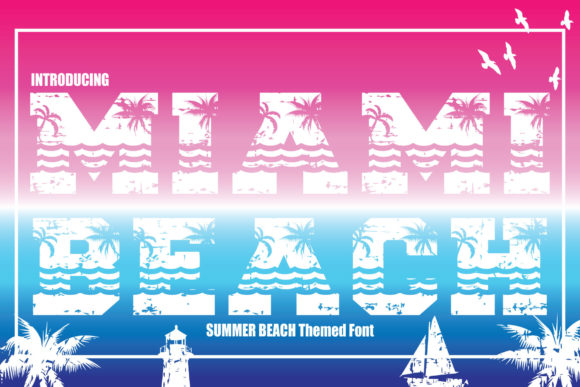
If you are looking to inject a sense of velocity, aquatic freedom, and undeniable cool into your next project, Miami Beach is more than just a typeface; it is an attitude. This bold, incredibly cool, and fun display font captures the essence of speed and water sports with a flair that few other fonts can match. Whether you are designing a promotional poster for a surfing competition, a landing page for a high-speed boat rental service, or a vibrant logo for a summer festival, this typeface offers a visual language that speaks directly to energy and excitement.
However, while the aesthetic appeal of Miami Beach is immediate and striking, using it effectively requires a nuanced understanding of its capabilities and limitations. Many designers rush to apply this font without considering the context, leading to projects that feel chaotic rather than dynamic. To ensure your work stands out for the right reasons, it is essential to understand what makes this font unique and how to avoid common pitfalls that can undermine your design's impact.
The Allure of Speed and Water
At its core, Miami Beach is designed to evoke movement. The letterforms often feature slanted angles, sharp edges, and fluid curves that mimic the spray of water or the blur of motion on a highway. This makes it an ideal candidate for brands that want to communicate urgency, adventure, and a carefree lifestyle. When used correctly, the font transforms static text into a visual experience that feels alive.
Creatives often gravitate toward this typeface because it solves a specific problem: how to make a headline grab attention instantly in a crowded digital landscape. It cuts through the noise of standard sans-serifs and serif fonts, offering a personality that is both approachable and authoritative. For entrepreneurs and marketers, this means your message is not just read; it is felt. The font's versatility allows it to adapt to various design ideas related to speed, water sports, or both, making it a powerful tool in your creative arsenal.
Avoiding the Overuse Trap
One of the most frequent mistakes I see when evaluating designs featuring Miami Beach is the overuse of the font. Because the typeface is so expressive, it demands space and attention. Using it for body text, long paragraphs, or even secondary headings can quickly overwhelm the reader. The result is a design that feels exhausting rather than exciting. When every word screams for attention, nothing stands out.
To maintain a professional and polished look, reserve Miami Beach for headlines, key call-to-action buttons, or short taglines. Pair it with a clean, neutral sans-serif or a simple serif for your supporting text. This contrast ensures that the energy of Miami Beach is highlighted without creating visual clutter. By letting the bold font take center stage only where necessary, you guide the viewer's eye naturally through your content, improving readability and user satisfaction.
Legibility and Context Matter More Than Style
It is easy to get swept up in the "cool factor" of a display font, but legibility should never be sacrificed for style. A common misunderstanding among beginners is assuming that because a font looks great at a large size, it will remain readable at smaller scales or on low-resolution screens. Miami Beach, with its distinctive character shapes, can become difficult to decipher when scaled down too far or placed against a busy background.
This oversight can have significant consequences for your project's effectiveness. If a potential customer cannot quickly read your offer or navigate your site due to poor typography choices, they are likely to leave. In the world of digital marketing, seconds count. A font that looks impressive in a mockup but fails to communicate clearly in the real world is a wasted investment.
Before committing to using Miami Beach, test it rigorously across different devices and screen sizes. Check how it performs on mobile phones, tablets, and desktop monitors. Ensure that the spacing between letters (kerning) remains consistent and that the contrast between the text and the background is sufficient. If you find that the font becomes illegible in certain contexts, consider adjusting the weight, increasing the size, or switching to a simpler alternative for those specific elements.
Purchasing and Licensing: What You Need to Know
When acquiring a premium font like Miami Beach, many users overlook the importance of reading the licensing agreement carefully. Fonts are intellectual property, and the terms of use can vary significantly depending on whether you need a personal license, a commercial license, or an extended web license. Failing to purchase the correct license can lead to legal issues, fines, or the forced removal of your design assets.
Always verify the scope of the license before downloading or buying. Does it cover print materials? Web usage? Mobile apps? How many impressions or installations are allowed? Understanding these details upfront saves you from costly corrections later. Furthermore, purchasing from reputable sources ensures that you receive a high-quality file with all the necessary weights and styles, which is crucial for maintaining consistency across your brand identity.
Evaluating Quality Before You Commit
Not all versions of a font are created equal. When exploring endless variations of Miami Beach, you might encounter free versions or pirated copies that lack the precision of the original. These inferior files often suffer from inconsistent stroke widths, broken glyphs, or missing characters. Using such a file can ruin the professionalism of your entire project, no matter how good the concept is.
To avoid this, always inspect the font files before integrating them into your workflow. Open the font in a vector editing program to check for smooth curves and proper anchor points. Look for any jagged edges or irregularities in the letterforms. Additionally, ensure that the font includes a full character set, including special symbols, accents, and punctuation marks that you might need for international audiences.
Investing in a high-quality version of Miami Beach pays off in the long run. It provides a solid foundation for your design, allowing you to focus on creativity rather than fixing technical glitches. Remember, the goal is to create work that is not only visually stunning but also technically sound and reliable.
Strategic Application for Maximum Impact
Once you have selected a high-quality version of Miami Beach and secured the appropriate license, the next step is strategic application. Think about the narrative you want to tell. Are you promoting a race car event? Use the font to emphasize speed and adrenaline. Is it a beachwear collection? Let the fluidity of the letters suggest the ocean breeze.
Don't be afraid to experiment with layout techniques. Try overlapping text with images, using the font as a background texture, or combining it with hand-drawn elements to add a human touch. The key is to let the font enhance the message, not overshadow it. By thoughtfully applying Miami Beach, you create a cohesive design that resonates with your audience and achieves your communication goals.
In conclusion, Miami Beach is a versatile and powerful tool for designers who want to convey energy and style. However, success depends on avoiding common mistakes like overuse, neglecting legibility, ignoring licensing terms, and settling for low-quality files. By approaching this font with caution and creativity, you can unlock its full potential and produce work that is both beautiful and effective. Take the time to explore its variations, test its limits, and apply it with purpose. Your designs will thank you for it.