Remora Camilla: Bringing Retro Charm and Bold Authority to Your Next Design
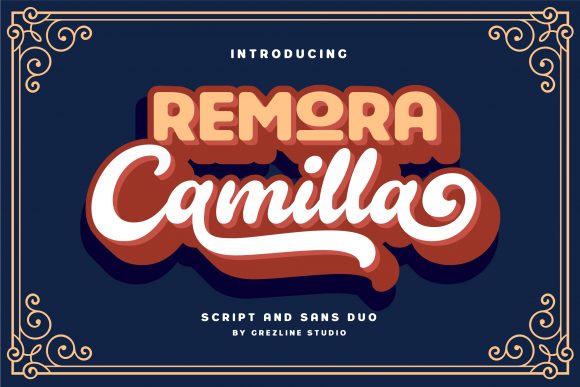
When you are scrolling through a sea of sterile, corporate sans-serifs, there is a distinct moment when a typeface stops the eye. It is not just about legibility anymore; it is about personality. Remora Camilla is exactly that kind of font pair. It combines a display script with a unique sans-serif companion, creating a visual language that feels both nostalgic and undeniably modern. If you have been searching for a way to inject warmth into your digital projects without sacrificing readability, this duo offers a compelling solution.
The name itself suggests movement and attachment, much like how these fonts attach themselves to the memory of your audience. The pairing works because it balances two opposing forces: the fluid, human touch of the script and the structured, reliable backbone of the bold sans. This isn't just a pretty combination; it is a strategic tool for designers who want their work to speak with confidence and character.
Why Personality Matters in Modern Digital Spaces
In an era where users make split-second decisions on whether to stay on a page or bounce away, the "vibe" of your typography plays a massive role. We often think of fonts as mere containers for text, but they are actually emotional cues. A standard Helvetica might tell a user that information is neutral, but Remora Camilla tells them that the content is curated, personal, and crafted.
The script component brings a sense of hand-lettering and approachability. It breaks down the barrier between brand and consumer, suggesting that there is a real person behind the screen. Meanwhile, the accompanying sans-serif provides the necessary anchor. Without that strong, bold counterpart, a script can become difficult to read or look cluttered. Remora Camilla solves this by ensuring that while the headline grabs attention with flair, the body text remains crisp and easy to digest.
Real-World Applications Across Industries
So, where does this specific font pair shine? Its versatility allows it to fit into various scenarios, from small creative studios to established lifestyle brands. Here is how different industries are finding practical value in using Remora Camilla.
- Creative Agencies and Portfolios: For graphic designers or photographers showcasing their work, the portfolio needs to recede so the images can take center stage. However, the text still needs to establish the agency's identity. Using the display script for project titles adds a layer of artistic flair, while the bold sans keeps navigation menus clear and functional.
- Fashion and Lifestyle Blogs: In the world of fashion, trends move fast, but style should feel timeless. A blog covering vintage aesthetics or modern streetwear can use the retro personality of Remora Camilla to evoke a specific era. The script feels like a magazine editorial, while the sans ensures long-form articles remain readable on mobile devices.
- Boutique E-commerce: Online stores selling handmade goods, artisanal foods, or unique accessories often struggle to convey quality. Standard fonts can feel mass-produced. By applying Remora Camilla to product headers and promotional banners, a boutique can instantly elevate its perceived value. The bold characteristics signal strength and reliability, which builds trust with potential buyers.
- Event Branding and Invitations: Weddings, music festivals, and pop-up markets all rely heavily on first impressions. The script element is perfect for invitation cards or event posters, offering that "handwritten note" feeling. Yet, for schedules, venue maps, or safety guidelines, the bold sans ensures that critical information is never missed.
Understanding the Dynamic Between Script and Sans
The magic of this pair lies in the contrast. When you look at Remora Camilla, you aren't just seeing two different weights; you are seeing a conversation between two styles. The script is charming and slightly whimsical, drawing the reader in with its curves and flourishes. But if you were to use it for everything, the design would quickly become overwhelming and hard to scan.
This is where the unique sans-serif comes in. It acts as the stabilizer. Its strong and bold characteristics provide a solid foundation. Imagine a poster design: the main headline screams with the energy of the script, perhaps announcing a sale or a new collection. Immediately below it, the bold sans lists the details—date, time, location—in a way that demands attention without competing for it. This hierarchy is crucial for guiding the user's eye naturally through the content.
Practical Considerations Before You Commit
While the aesthetic appeal is undeniable, choosing a font pair requires a bit of due diligence. Before downloading and integrating Remora Camilla into your project, consider the context of your final output.
Readability is King: Even though the script is charming, it is best reserved for headlines, logos, or short phrases. Never use the script for long paragraphs of body copy. The varying stroke widths and decorative elements can fatigue the eye over extended reading periods. Always reserve the bold sans for your primary content areas.
Contextual Fit: The retro personality of this font means it leans towards specific aesthetics. It might feel out of place in a highly technical, data-heavy dashboard or a medical application where neutrality is preferred. However, it is perfect for anything that wants to evoke nostalgia, creativity, or a human touch. Think about your audience: are they looking for a quick transaction, or are they looking for an experience?
Technical Performance: As with any custom font pair, ensure you are optimizing the file formats for the web. Loading heavy display scripts can impact page speed if not handled correctly. Use web-safe subsets or variable font features if available to keep your site snappy. A beautiful design that loads slowly will frustrate users regardless of its charm.
Maximizing Impact with Strategic Pairing
To get the most out of Remora Camilla, think about spacing and scale. The script has a certain rhythm to it, and giving it enough white space around it allows those unique curves to breathe. Don't crowd the display text with other busy elements.
For the bold sans, leverage its weight. It is designed to be strong, so don't be afraid to use it in large sizes for subheadings or call-to-action buttons. The contrast between the flowing script and the blocky, confident sans creates a dynamic tension that makes the design memorable. It prevents the layout from feeling static or boring.
Ultimately, Remora Camilla is more than just a set of glyphs; it is a way to communicate attitude. Whether you are launching a new coffee shop, revamping a personal blog, or rebranding a creative studio, this font pair offers a proven path to balancing charm with authority. It respects the history of typography while embracing the needs of modern digital communication.
By focusing on where these fonts can solve real problems—like establishing trust, guiding attention, and adding emotional depth—you move beyond simply picking a "pretty" font. You start making intentional design choices that resonate with your audience. In a crowded digital landscape, having a voice that sounds like you is invaluable, and sometimes, that voice is found in the curve of a letter or the boldness of a line.